Maintaining your horse's health involves more than just regular exercise and a balanced diet. Equine dental checkups are a critical component of their overall well-being, often underestimated but essential for their comfort, performance, and longevity. As a trusted large animal veterinarian in the Lowcountry, Carter Veterinary Services understands the vital role that proper dental care plays in your equine companion’s life.
The Importance of Equine Dental Health
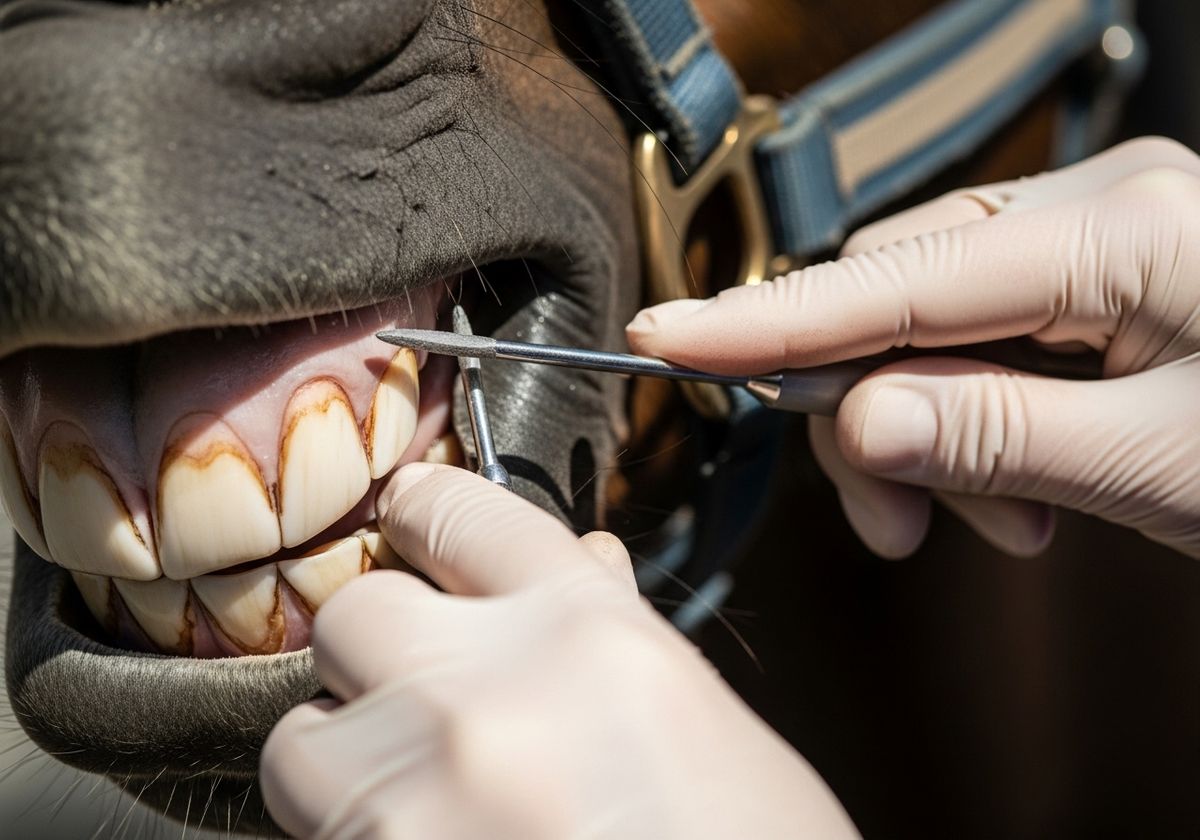
A horse's teeth continuously erupt throughout their life to compensate for the wear from grazing. This process can lead to the development of sharp enamel points on the outer edges of the upper cheek teeth and the inner edges of the lower cheek teeth. These sharp points can cause painful ulcers on the cheeks and tongue, making chewing difficult and affecting nutrient absorption. Regular horse dental care, including floating (filing down these sharp points), prevents these issues.
Common Dental Problems in Horses
Several dental issues can affect horses, including:
Sharp Enamel Points: As mentioned, these can cause significant discomfort and injury.
Uneven Wear: Misalignment of the jaws can lead to uneven wear of the teeth, causing hooks and ramps.
Missing or Loose Teeth: These can affect chewing efficiency and lead to weight loss.
Dental Abscesses: Infections in the tooth roots can cause severe pain and systemic illness.
Retained Caps: Young horses may retain baby teeth (caps), which can interfere with the eruption of permanent teeth.
Signs Your Horse Needs a Dental Checkup
Recognizing the signs of dental problems is crucial for early intervention. Contact your equine vet in Savannah if you observe any of the following:
Dropping food while eating (quidding)
Excessive salivation
Difficulty chewing
Weight loss
Head tilting or shaking
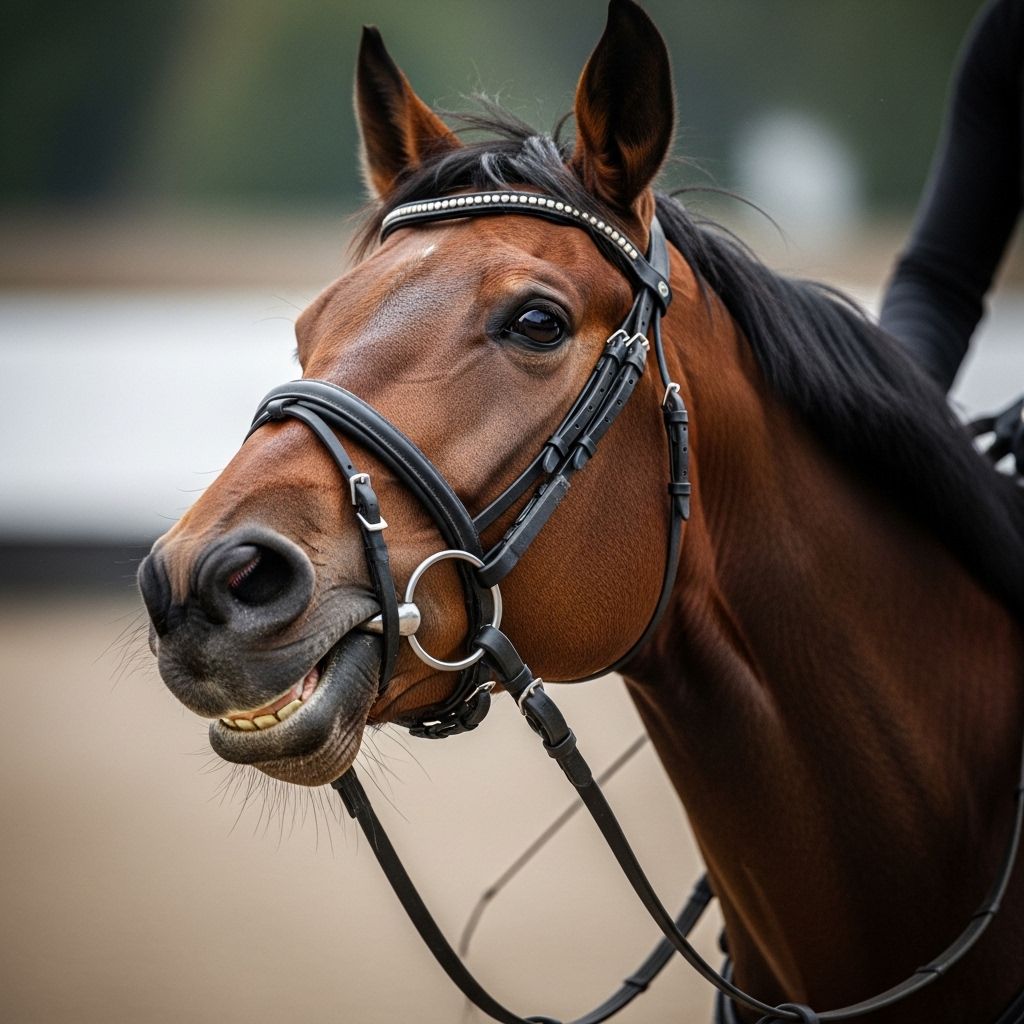
Resistance to the bit
Foul odor from the mouth
Facial swelling
The Dental Checkup Process
A thorough equine dental examination involves:
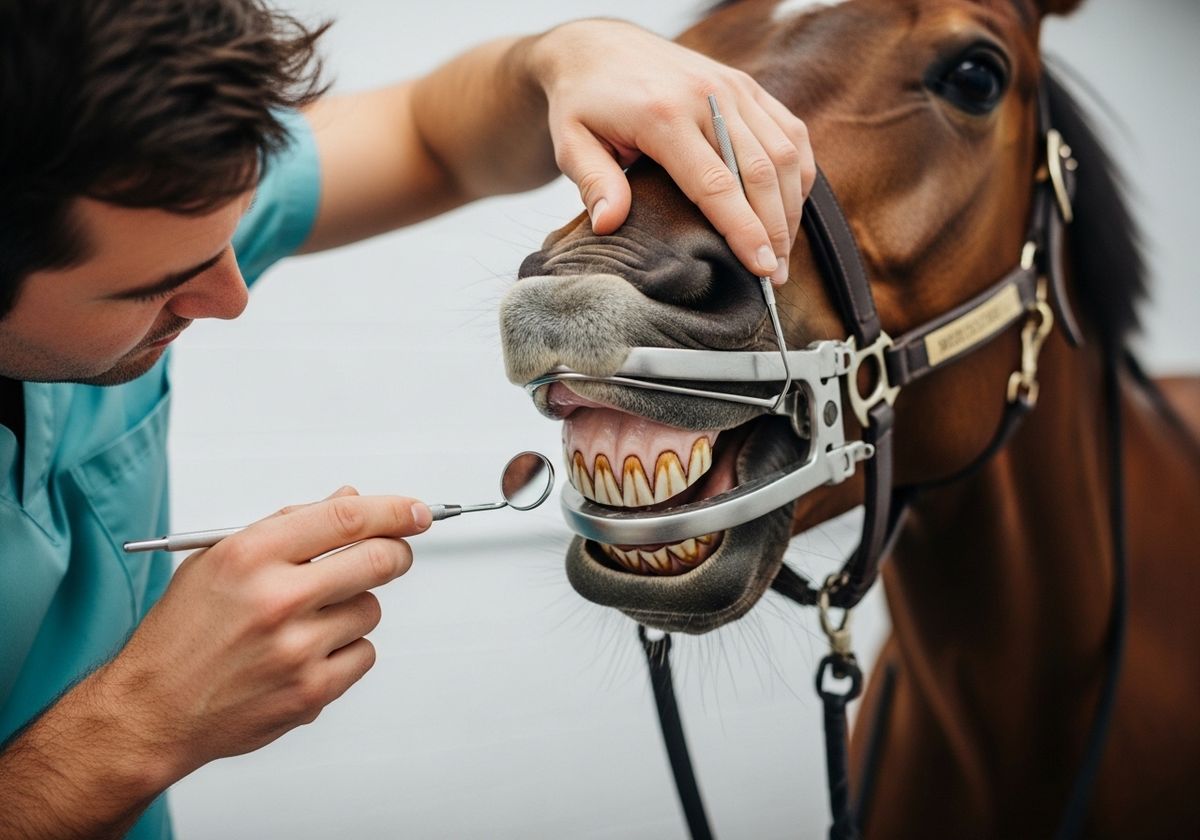
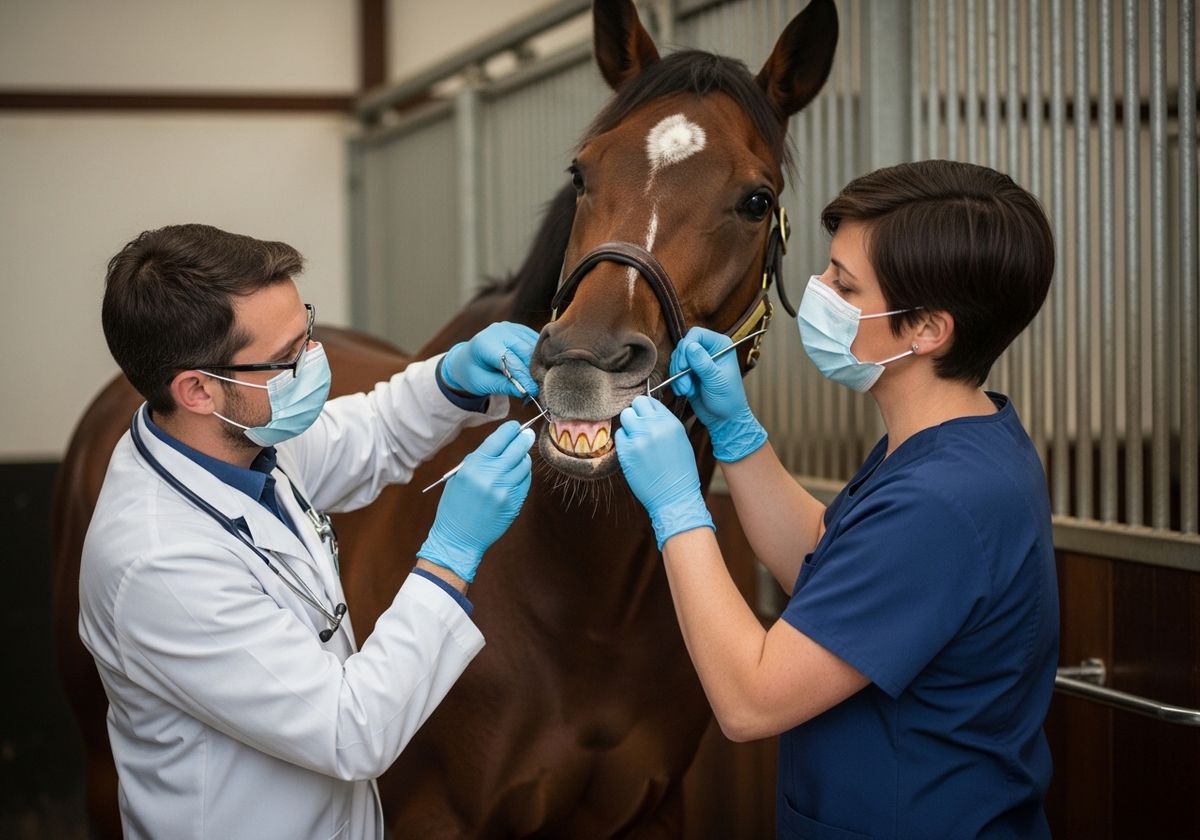
Visual Examination: Your large animal veterinarian will start by examining the horse's head, mouth, and teeth for any obvious abnormalities.
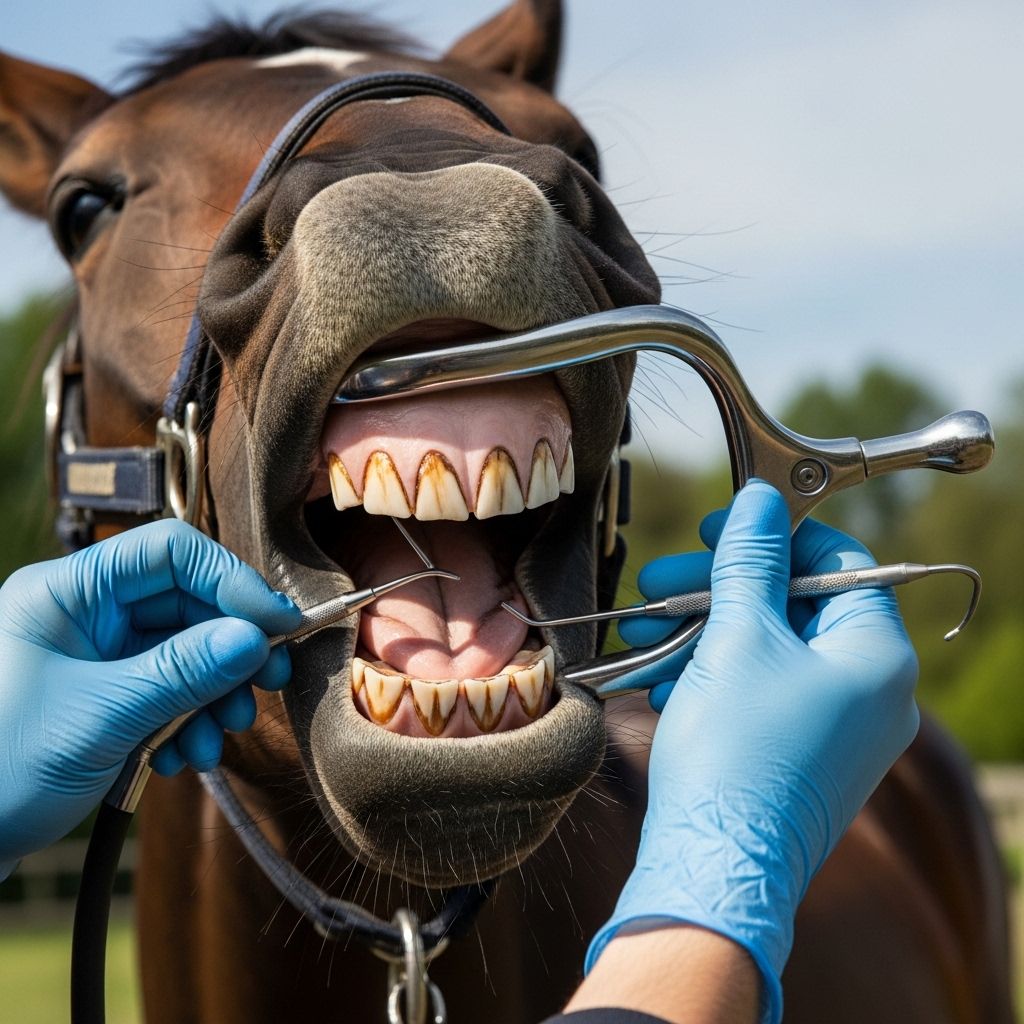
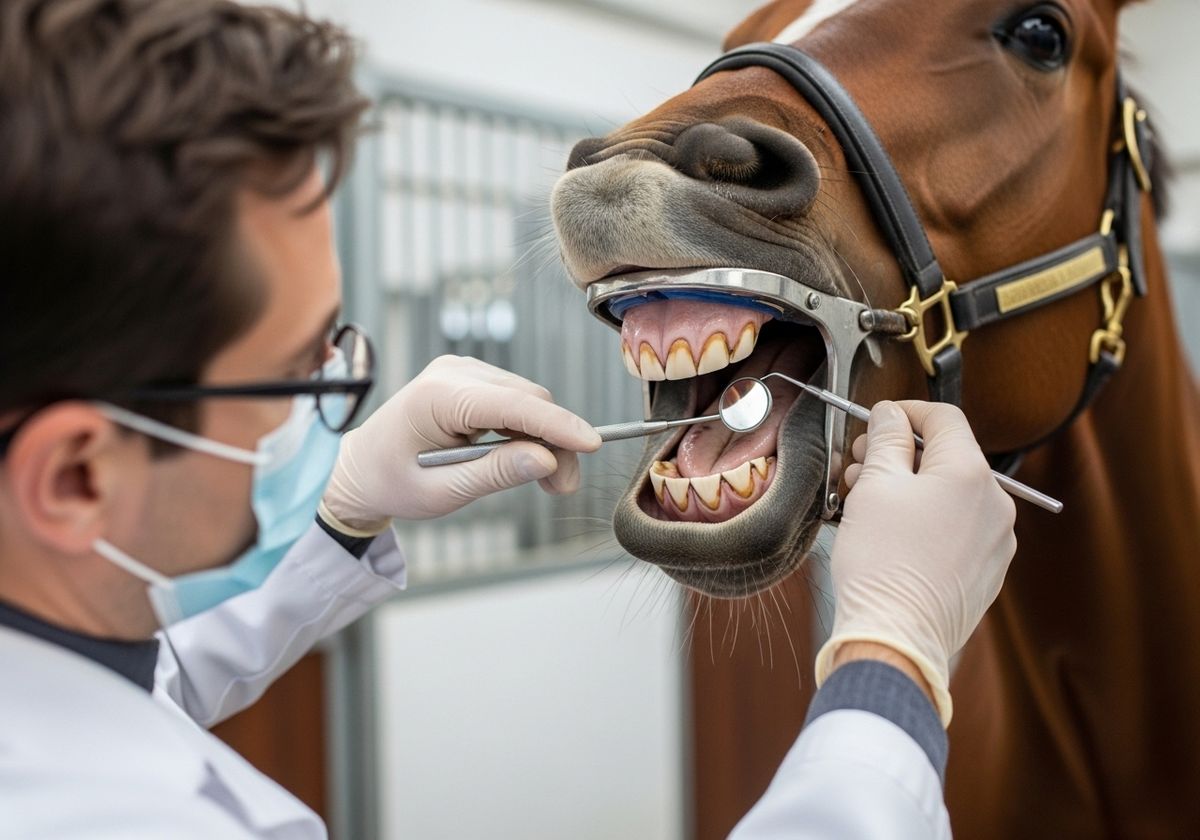
Mouth Speculum: A speculum is used to hold the mouth open, allowing for a detailed examination of the entire oral cavity.
Dental Mirror and Probe: These tools help to visualize and feel for sharp points, loose teeth, and other issues.
Floating: If necessary, sharp enamel points are filed down using a dental float.
Corrective Procedures: Any other necessary procedures, such as extracting loose teeth or treating infections, will be performed.
Preventative Dental Care for Horses
Regular dental checkups, ideally every 6-12 months, are essential for maintaining your horse's dental health. Along with providing a balanced diet and adequate forage can help promote healthy wear of the teeth. Early detection and treatment of dental problems can prevent more serious issues from developing.
Prioritizing your horse's dental health is an investment in their overall well-being. Regular equine dental checkups are crucial for preventing painful conditions, ensuring efficient chewing, and maintaining optimal health. Don't wait until you notice signs of a problem – schedule a dental examination with Carter Veterinary Services, your trusted Lowcountry livestock vet, today.